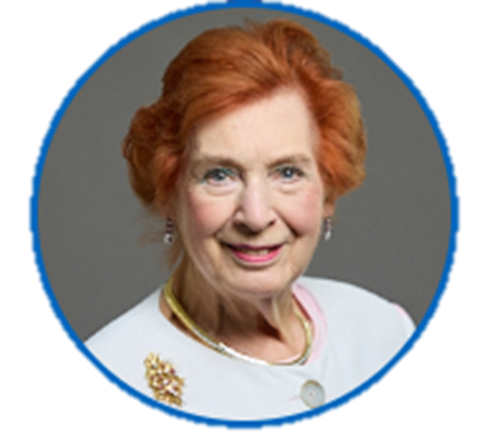
School Council meets Baroness Fookes
What a fantastic way to begin Parliament Week! Our School Councillors had the opportunity to learn more about democracy, the work of Parliament and how decisions are made in our country. Meeting Baroness Fookes and asking her questions helped bring their learning to life, showing them how their voices can help shape the future.
On Friday, our School Council took part in a very special session. Meeting virtually via Teams, the children had the exciting opportunity to meet Baroness Fookes and ask her questions about her role in the House of Lords, her life and her experiences.
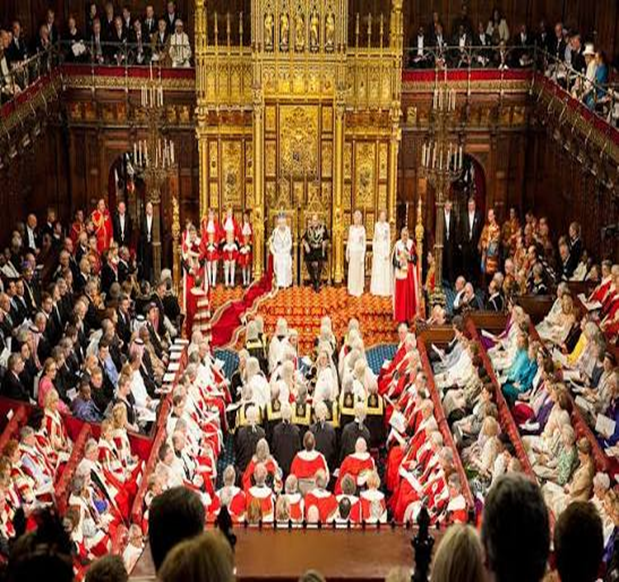
The session began with Baroness Fookes explaining the role of the House of Lords and sharing photographs from inside the chamber. The children were fascinated to learn more about the important role the House of Lords plays in scrutinising laws and helping to shape the future of our country.
The second half of the session was dedicated to a question-and-answer session, during which our School Councillors asked some thoughtful questions that they had carefully prepared beforehand. They were keen to find out more about how decisions are made, how people can influence change and how children's voices can be heard.
Some of the questions and answers particularly stood out:
What does a typical day in your job look like?
Baroness Fookes explained that she gets up early and travels to London. She checks the agenda for the day, replies to emails and messages, and attends sessions in the House of Lords, which usually take place in the afternoon and finish at around 5 pm.
What is the most important change you have helped make to our country?
She spoke about changes to the way members of the House of Lords are appointed. Her explanation helped the children understand that hereditary appointments have been removed, meaning people can no longer automatically become Lords because their father was one.
What are you most proud of in your role?
Baroness Fookes shared her work promoting animal welfare, particularly her efforts to help change the law around the transportation of live animals across Europe for slaughter.
Why did you decide to become a Lord, and how did you become one?
She explained that she was invited to join the House of Lords by the then Prime Minister, John Major.
What did you want to be when you were our age?
The children were interested to discover that, from the age of 11, Baroness Fookes wanted to become an MP.
What was your favourite subject at school?
Her favourite subjects were History, English and French. She emphasised how important English is, particularly when it comes to communicating clearly and confidently.
How do you make sure children's voices are heard when important decisions are being made?
Baroness Fookes explained that young people are invited to contribute to debates and committee discussions in the House of Lords. She also shared that children had recently been invited to give their views on a draft bill. She encouraged the children to contact their local MP if they wanted to share their ideas or opinions.
If you could change one thing about schools in the UK, what would it be?
Her answer was to ban mobile phones in schools and reduce screen time. She explained that both can reduce opportunities for speaking and highlighted how important it is for children to learn to speak confidently and articulate their ideas.
What do you think is the biggest challenge facing children growing up today?
Baroness Fookes felt that the speed at which things are changing for young people is a significant challenge. However, she reminded the children that some things should never change, including our values of truth, reliability and punctuality.
How do you decide which problems in our country need tackling first?
She explained that the government decides its priorities through its manifesto. The House of Lords helps to scrutinise and support the process, but the government makes the decisions about what it will tackle first.
What happens if you disagree with a decision made by the government?
Baroness Fookes explained that members of the House of Lords vote by stating whether they are ‘content’ or ‘not content’. If a draft bill is not agreed, it can be returned to the government for changes.
Have you ever changed your mind about something after listening to someone else's opinion?
She explained that she sometimes changes her mind after taking time to think and reflect on what someone has said. Listening to different opinions can help us see things from another perspective.
Do you think one person can really change the world?
Baroness Fookes believes that leaders can make a real difference and help to change the world for the better. She explained that world leaders have an important opportunity to make the world a better place for everyone.
What advice would you give to a child who wants to make a difference when they grow up?
Her advice was to become a leader and start making changes. She encouraged the children to begin in their own classroom and school, just as they are already doing as School Councillors. They could then make a difference in their street or town. She reminded them that it does not matter how big or small a change is, as long as it is a change for the better.
If you could give every child in the UK one opportunity, what would it be?
Baroness Fookes felt that the most important opportunity would be a really good education. She highlighted the importance of great teachers and classrooms where learning is not interrupted by poor behaviour.
Our School Councillors also asked about the importance of education, leadership and making a difference. They were encouraged to hear that even small actions can lead to positive change and that their voices matter.
The session was a fantastic opportunity for our children to learn more about democracy, leadership and the work of the House of Lords. It also reinforced the importance of listening to others, sharing ideas and taking action to make our school and wider community a better place.
At Sinclair, we are proud to develop architects of a better world, and our School Councillors certainly demonstrated that they are already taking their first steps towards making a difference!